Custom Search

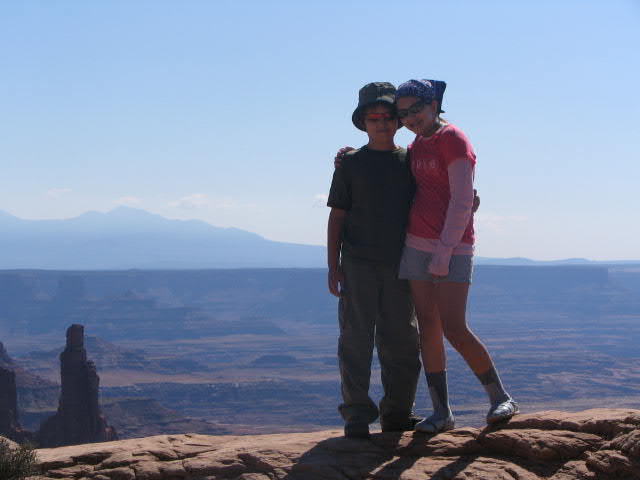
Canyonlands National Park, Utah

Canyonlands National Park, Utah
Kimi & Shaun - On Top of the World!
Showing posts with label Christine Yablonski. Show all posts

Monday, October 18, 2010

Labeling

Labels are useful - they help us categorize & systemize.  They allow for a quick understanding of what something is.  When I go to the bookstore, I follow the labels to find the book I'm looking for.  When I'm researching for something online, I use keywords, another form of labeling, to get to what I need quickly.  Labels are useful.

Labels can also hinder.  When something is more complicated it becomes harder fully capture it within a label.  Go ahead - use a political party label to describe two different person's ideologies & see if they are really identical.

In the microcosm of radical unschooling, not everyone agrees.  Shocking, I know!  Most people seem to agree upon a very basic description - that it is self-determined life-long learning utilizing many resources & means to achieve knowledge.  Yet read postings on online unschooling groups & one quickly sees that how this plays out in real day-to-day life within families is different.  People who consider themselves unschoolers hate being told by someone else that they are not "real" unschoolers.  At the same time, whenever an unschooler witnesses or hears about behavior that they deem "not unschooling" it can be hard not to judge.  After all, we are still struggling to be understood by those not familiar with our philosophy - we don't want it to be further muddied by behaviors that don't support the philosophy.
"I unschool my kids, except for math." "We unschool for eduction but not for parenting." "That family doesn't represent all unschoolers"  "If you didn't unschool right from the start, you're not a true unschooler"  "If your kids wants to go to school, you're not a true unschooler" "That's really just unparenting, not unschooling"
Which of these statements are valid, which are not?  This can get very subjective - I have my own opinion, but it might not be the same as yours. What complicates this even more is that there are times when my behavior does not reflect my radical unschooling beliefs. They are not my proudest moments - moments when I don't have the patience or the time or the connection with my family that I strive to have.  There have been times when I absolutely didn't look like a radical unschooling mom.

So, is the radical unschooling label really subjective?  Absolutely not!  There is still some core principles that need to be present for someone to be a radical unschooler:

  • Respect your child as a person
  • Value the opinion & needs of everyone in the family
  • Be present in your children's lives - help them explore when they are active, engaged & curious and to retreat into themselves when they need to cocoon
  • Never shame, never hit!
  • Value what they value - you don't have to play World of Warcraft but you should know what characters they play & what level they are at; you don't have to know all the constellations, but you should be engaged in helping them find out more about the cosmos.
  • Use logic, not fear, to inform your decisions and behaviors
  • Recognize that your value system, be it about religion, food, politics, or entertainment, is not your child's value system.  If you disagree with anything your parents believe, then you should be able to recognize your child's right to disagree with you.  Don't take it personally - just because they have their own opinions or values doesn't mean they don't love you.
So, when I see that I'm not living up to my radical unschooling principles what do I do?  I learn from it - I think carefully about what got in the way & I resolve to handle things better.  I don't act like a radical unschooler, I am a radical unschooler & the only way for that to be true is if I keep pushing myself to live a life that follows these principles.  After all, I want to be the parent my children need so that they will be the parent their children will need.

Tuesday, October 12, 2010

Personal vs. Political: Choosing my Children Over Public Education

I was educated in the public school system.  There was no way my parents could afford any kind of private schooling.  Throughout my youth, my parents urged me to do well enough in school that I could get a scholarship to go to UMASS, the cheapest 4-year college they knew of.  It was their hope that I would be able to live a more prosperous life than they ever had - & a good education was the key to achieving that goal.

I did do well enough to qualify for scholarships but I didn't go to UMASS.  It turns out that more competitive colleges & universities will give financial aid to students who have the ability but not the funds.  So, doing well in school led me to being able to attend a prestigious college. which led to graduate school, which led to starting my career as a child therapist living in New York City.  I had achieved my parents' & my goal.

Phil also found public education to be his ticket out of a hard life.  His mother was not capable of providing proper care to him & his brothers - the schools he attended were his sanctuaries, providing a safe place to be & two hot meals five times a week.  He earned admission to one of the exam high schools - public schools that accepted students via exams.  His high grades here led him to be able to attend a prestigious college, with the help of financial aid & scholarships.  This led to his starting his career in high tech business living in New York City.  He had achieved his goal.

Now, in another post, we'll discuss whether these goals turned out to be the best goals to set for ourselves.  For the purpose of this post, however, I'll continue to simply focus on understanding that at a certain point in our lives, we both believed that job & financial security were extremely important & we credited our experiences with public education as helping us get there.

Compared to our upbringings, we were living a prosperous life together.  Even as a single-income family, we were in a high income bracket that many aspire to reach.  We explored sending our kids to private school - Montessori schooling seemed particularly attractive, as it seemed more child-centered - but we were reluctant to send our children to private schools when we valued publicly-funded, accessible to all schools.  After all, we benefited from public education, right?  So, we made a conscious decision to support our public schools as much as possible.

We bought all the various fundraising who-zits & what-zits to support the PTO.  I volunteered several times a month in both kids' classes - providing support for the teaching staff.  We donated classroom supplies, I chaperoned field trips.  Above all else, we sent our kids to school.

You all know we ended up not only homeschooling but unschooling - the details of that decision having been described in other posts.  Most of our friends & family have been very supportive of our decision - and even if they don't think this choice is right for them, they believe that we ultimately should have the ability to make this decision.  There were some dissenters, however, & one of the most vehement one was someone who could not understand why I would not continue to support the public school system.  To him, choosing my children over "all" children was socially & morally selfish.  AFter our interviews in various media, I saw a few people mention this, too.  Why not fix the problems from within rather than remove ourselves from it, in part because we could afford to leave?

I recently watched Herbert Kohl's keynote address from the 7th annual AERO conference.  One of his points was that choosing alternative education, be it charter schools, private schools or homeschooling, does society a disservice.  He looks at public education as a means toward social justice.  It's a challenging thought - particularly since it was a belief Phil & I held for most of our lives. 

We are all too aware that there are children out there who not only won't be unschooled but would be harmed by unschooling.  Without a committed engaged parent or parents working with the child to learn and explore the world around them, the child is unlikely to flourish.  When neglect or abuse is present, the parent is not the child's advocate.  Yet, I'm uncomfortable with the stance that since some parents, well, suck, then we should create social systems that assume all parents will behave badly.  So, how do we help the vulnerable children while avoiding the numerous negatives that currently embody the public school system?

Perhaps community learning centers are a solution.  These would be similar to "free" or democratic schools.  One example of how they work is Sudbury Valley Schools:

At Sudbury Valley School, students from preschool through high school age explore the world freely, at their own pace and in their own unique ways. They learn to think for themselves, and learn to use Information Age tools to unearth the knowledge they need from multiple sources. They develop the ability to make clear logical arguments, and deal with complex ethical issues. Through self-initiated activities, they pick up the basics; as they direct their lives, they take responsibility for outcomes, set priorities, allocate resources, and work with others in a vibrant community.
Trust and respect are the keys to the school’s success. Students enjoy total intellectual freedom, and unfettered interaction with other students and adults. Through being responsible for themselves and for the school’s operation, they gain the internal resources needed to lead effective lives.
My proposal, however, doesn't limit the learning opportunities to students up to age 18.  Imagine a learning center where:

  • All ages are present, since we never stop learning.
  • The knowledge & experience of older citizens can be shared with the knowledge & experience of youth.
  • Study groups and other collaborative learning groups are formed based on the participants' interests and abilities.  
  • People can explore an interest as deeply as they wish or move on as the interest leads to other interests.
  • "Teachers" are facilitators, becoming mentors or guides based upon their personal knowledge & skills.
  • True community can be created, since the community uses the space collectively.  The children are no longer artificially removed from the rest of their community.  Neighbors will actually know neighbors!
  • Self-reliance skills, be it growing/raising/preserving food or do-it-yourself projects, can be rediscovered - reducing the waste & dependence upon manufactured products & even manufactured food our society has become accustomed.
Is it possible to change the way we think about what education is all about?  Is it possible to change the priorities that our highly commercialized society tells us we should value - the ability to buy lots of "necessary" stuff.  Can those of us who value the principles of unschooling believe that these principles can be present within a publicly funded education system?  Is the current system ripe for radical change in what education really means or is it "too big to fail", not realizing that it already is failing?

What do you think?

Monday, October 11, 2010

National Coming Out Day

Most of my friends are fairly progressive in their belief systems.  Most of my friends are not only "tolerant" of gays and lesbians, but, in fact, believe that gay, lesbian, bisexual, asexual and transgender people are, above all else, people.  People who deserve the same rights as currently held by heterosexual people.

So it has been a horrible reminder nearly each morning when I open up my newspaper & read yet another example of people being hurt, physically & emotionally, simply because of their sexual orientation.  The rage and hate that is being expressed by the perpetrators is shocking because these people completely forget that they are attacking another human being.  They no longer recognize the humanity in their victim, & truly, in themselves.

I am not so naive as to think that some day everyone, across the planet, will live in total peace and harmony.  There will always be forces in place in our societies that create feelings of envy, fear, oppression & inequality.  Just as bullying occurs within a microcosm society, such as school, in part as a result of feeling a lack of control over one's life/experiences within that society, bigotry & oppression occurs when one feels a need to blame someone else for the troubles in one's life.

And they feel justified: How dare those gays make me feel uncomfortable!  How dare they want to marry, raise children, kiss in public, work next to me, teach children, fight wars, play sports - normalizing their lifestyle & spreading their gay agenda!

I don't understand their fear.  I don't understand their anger.  And I absolutely don't understand their raging attacks.  Where did they learn to hate?  How did they get to this place where attacking others is OK?  Why do they think teasing, bullying & mocking people is normal, but the person they are targeting is not normal.

I want to believe that society is changing - that attitudes about sexual behavior between consenting adults is no longer a trigger for hate crimes.  I want to believe that the people I care about won't be hurt by someone else just because they are gay, lesbian, bisexual, asexual or transgendered.  I want to believe that the people I don't even know won't be hurt by someone else just because they are gay, lesbian, bisexual, asexual or transgendered.

Before you judge a person for their sexual orientation, please remember:  they are a person.  They are someone's child, sibling, cousin, parent, spouse, loved one, friend, neighbor, co-worker.  They are as worthy of love & respect as you.

Stop the hate.

Monday, August 30, 2010

Living with our Unschooling Principles

It's one thing to say "we're radical unschoolers", but how do we live our day-to-day lives with those principles?  It can get tricky - we all have those triggers, those "lines that shall not be crossed" in our minds.  Remembering to use our unschooling principles can get lost in the scripts that run in our heads.

Here's an example from my life.  I prefer to buy organic & locally-grown food whenever possible.  When I first started feeding Kimi solid foods, I either made it myself or purchased organic baby food.  It was extremely important to me that she eat the safest, purest food possible.  And so long as I made the grocery shopping decisions, it was never an issue.  But a funny, & predictable, thing happened on the way to Whole Foods - my kids started to choose their own food that they wanted to buy.  And it very often wasn't organic, or local, or even all that nutritious.  Doritos, Cheez-Its, Yodels & Pop Tarts suddenly graced my pantry shelves.  I didn't like it.  I didn't want them there.  They were polluting my sweet children's bodies with strange chemicals & preservatives.  I really wished the kids didn't want them.

So, I would "subtly" ration them - "let's just get 1 box...we'll get more next time" (& then I would conveniently forget to get more the next time.  And guess what happened - the kids began to value them, hoarding them & fighting over how much each child got.  It wasn't pleasant.

Then, as we learned more & more about radical unschooling, I realized that I had to stop making a big deal out of the food choice our family made.  After all, I sometimes eat "junk" food - & I certainly wouldn't appreciate someone telling me I really shouldn't be eating that.  I started saying "yes" in the grocery aisle more & more.  The kids were free to try different snack foods without judgement or arbitrary limits on quantity.

At first, they had a field day - lots of things got purchased & eaten, yet, they didn't stop eating the healthier foods, too.  They just ate a variety of things.  Sometimes they would binge a bit - eating several candy bars in an afternoon, for example.  But they didn't like the bloated feeling that followed - no more excessive eating of chocolate!

Today, my kids eat a healthy, varied diet that they self-select.  Kimi loves going to the local farmers market with me to pick out local & organic foods.  I continue to fill the fridge, freezer & pantry with lots of healthy yummies.  I also continue to happily buy the ice cream, Doritos & Cheez-Its.  Interestingly, when I buy, say, fresh raspberries they don't last the night, while the boxes & bags of snackie foods last much longer.

When we were interviewed by Good Morning America, Juju Chang expressed disbelief that the kids would choose healthy food if we didn't make them eat it, yet when we were in the Green Room at the studio, Kimi reached right past the chocolate croissants to get some fresh melon.  Look - non-coerced healthy eating!  It really happens!

My kids are healthy teens, rarely sick, & of normal weight.  They don't have any unhealthy attitudes about food or misconceptions about nutrition.  I don't think they would be as knowledgable about their own needs if I had prevented them from exploring food choices for themselves.  Trusting them was the best thing I could have done for them.

Monday, April 26, 2010

Let my Love Open the Door!

When everything feels all over
When everybody seems unkind
I'll give you a four-leaf clover
Take all the worry out of your mind
Let my love open the door
To your heart  


~ Pete Townsend, "Let My Love Open the Door"


As an unschooling parent I want my love to open the door to my kids' hearts & minds.  I want them to feel confident that my love will always be strong, supportive & unconditional.


When we open their lives to the amazing world we live in they have the opportunity to truly grow, learn and explore.  They don't hear "we're not studying that now", or "that's not the way to answer the question on the standardized test".  They explore deeply, they explore widely, & they explore using whatever tools they choose that helps them to understand what they are learning about.  


My love & respect for them tells them every day that I trust in their abilities & potential. 


Let your love open the door...

Thursday, April 22, 2010

And they sleep all day?

From The National Sleep Foundation:


Teens and Sleep

FACTS:

  • Sleep is vital to your well-being, as important as the air you breathe, the water you drink and the food you eat. It can even help you to eat better and manage the stress of being a teen.
  • Biological sleep patterns shift toward later times for both sleeping and waking during adolescence -- meaning it is natural to not be able to fall asleep before 11:00 pm.
  • Teens need about 9 1/4 hours of sleep each night to function best (for some, 8 1/2 hours is enough). Most teens do not get enough sleep — one study found that only 15% reported sleeping 8 1/2 hours on school nights.
  • Teens tend to have irregular sleep patterns across the week — they typically stay up late and sleep in late on the weekends, which can affect their biological clocks and hurt the quality of their sleep.
  • Many teens suffer from treatable sleep disorders, such as narcolepsy, insomnia, restless legs syndrome or sleep apnea.

CONSEQUENCES:

Not getting enough sleep or having sleep difficulties can:
  • Limit your ability to learn, listen, concentrate and solve problems. You may even forget important information like names, numbers, your homework or a date with a special person in your life;
  • Make you more prone to pimples. Lack of sleep can contribute to acne and other skin problems;
  • Lead to aggressive or inappropriate behavior such as yelling at your friends or being impatient with your teachers or family members;
  • Cause you to eat too much or eat unhealthy foods like sweets and fried foods that lead to weight gain;
  • Heighten the effects of alcohol and possibly increase use of caffeine and nicotine; and
  • Contribute to illness, not using equipment safely or driving drowsy.
Notice anything?  I sure do!  Everything known about normal sleep requirements for the average teenager is at odds with the typical high school schedule.  Why is this done to teens?  Because the schools' schedule can't adequately accommodate these needs.  One of the recommended solutions is to start school at a later time, but teens do not have a say in when they can attend school.

Unschoolers (& homeschoolers) are able to get the proper rest required for good physical, mental & psychological health when they are able to go to bed when they are tired & waken when they are ready.  

Does this mean they never get up early?  Of course not!  My children get up early when there is a reason - just like most adults.  How many adults get up early on the weekend or during their vacation "just because"?  Few - because unless they are getting up for a particular reason, they will stay asleep until they are naturally ready to waken.  Kids are no different.  So don't judge the night owls & assume laziness on their part - they are only doing what is natural.

Wednesday, April 21, 2010

What we wish the media shared about us...

We’ve been proactively exposing our kids for years to the many different ideas & things that exist in the world & they do choose to learn about interesting & complicated stuff, such as mythology, forensic science, geography, geology, opera, Shakespeare.  They have been reading since they were little - before school-age - & read every single day from numerous types of literature.
Kimi & Shaun can learn organically or formally - it’s their choice how they get their information.  They didn’t need classes to learn those things already mentioned as well how to swim, ski, hike, climb rock walls, read, figure out math problems, type, spell & write.  Things they have chosen to attend classes for include zoo school, a NASA simulation, sword fighting & historical weapons, gymnastics, Japanese culture, French, creative writing & robotics.  
There are a large number of radical unschoolers who are currently in college or already part of the work force.  They are positively engaged in society, not lost souls who can’t hold a job or take care of themselves.  Most 13 or 15 year olds don’t feel ready for college, no matter how they are being educated, so judging unschoolers differently is hypocritical.  Our kids will pursue whatever form of higher education they want because of specific goals they have set for themselves, not just because that’s what everyone is supposed to do.
There is a huge difference between no rules and no arbitrary rules.  When rules feel arbitrary people of all ages will fight back, sometime subtly, sometimes blatantly.  Our family “rules” are actually principles, with trust, respect & honesty always supporting the decision-making process.  As they internalize these principles, they are armed with the character tools needed to make logical, informed decisions and behave with honor and integrity, no matter how amazing or mundane the task.
Typical day?  Fortunately, unschoolers don't have a monotonous routine 5 days a week, 9 months out of the year!  "Typical" depends on the type of day.  

When we’re traveling, we have places to visit & things to do based upon whether the place is new to us or not.  This could include going to museums, zoos, national parks, cities, beaches, or musical or theatrical events.

When we’re home, the kids have various activities that they are engaged in, which could be done alone, with each other or us, or with a group of friends.  Activities include reading about, researching or exploring something that they are currently interested in, socializing with friends, working on projects, running errands or helping around the house.  Some days they have their classes to go to.  It varies & they are always busy & engaged in some activity.

Our kids are thoroughly engaged in their community - not being in school frees them to interact with many different people, doing different jobs, of different ages & backgrounds.  Their friendships & acquaintances provide them with a wider point of view of life styles that are different from their own.  The issues of bullying, cliques & negative peer pressure are not a part of their lives - they can't imagine why people would treat others that way.

Why can't learning be a joyful thing?  Why do so many people want children to "endure" - what does that say about their own lives?  And why do so many people think so little about the capabilities & work ethic of children, teens & young adults?  If so many are so lazy, well, were they unschooled or schooled - & if they were schooled (which we all know most were) then how can you attack unschoolers instead of the school system that begot these "lazy" adults?

I'm not saying the public school is all bad, even when it doesn't have a 100% success rate.  There are families that are not equipped, for various reasons, to unschool their children.  But the system is far from perfect.  Unschoolers are not perfect, but somehow we are expected to do better than what the school system is able to do.  I hope that those families looking for alternatives can find useful, factual information to help them make decisions that enhance their lives & the lives of their children.

JK Rowling: The fringe benefits of failure | Video on TED.com

JK Rowling: The fringe benefits of failure | Video on TED.com

What powerful words from an extremely talented wordsmith!

Live, Love, Learn & Trust!

In Massachusetts, we celebrate Patriots' Day, a yearly holiday that commemorates the Battles of Lexington & Concord on April 19, 1775.  


On April 19, 2010, our family unexpectedly found itself in a different kind of battle - a battle to defend our reputation & the image of radical unschooling.  We had allowed a national news organization, Good Morning America, to film us in and around our home as we explained the educational & parenting philosophies that are encompassed by Radical Unschooling.  Due to some heavy editing & some staged scenarios, as requested by GMA, our family ended up looking like a bunch of lazy uninformed crazies.  The word "crazy" was even used during the intro by George Stephanopoulos.  Their version of our lives didn't resemble what we do at all!


Fortunately, after a huge uproar on their website, they realized that they could have done a better job & had done us a disservice.  We were contacted soon after the segment aired & were invited to fly to NYC to appear on their show the next morning - they wanted to provide us with a do-over.  With more than a little trepidation, we decided to go.


We are so glad we did!  Everyone we met at Good Morning America treated us with respect & kindness.  They had us stay at a nice hotel right next to the studios & comp'ed our meals while in the City.  Juju made a point of talking to all of us before we went on air & was very kind & encouraging.  Meeting George right before the segment, he was warm & self-deprecating.  I have to say, I was impressed that he was willing to figuratively "take it on the chin" for the bias they displayed the previous day.


Even though we only had a few minutes to address so many issues raised by our original segment, we think we were able to get at least some key points out there.  The last thing we want is to make it harder for other unschoolers to be respected & understood as they live their lives & care for their children.


We're hoping that this new media interest will lead to healthy dialogue about learning & education, respectful family relationships, & helping all children find their inner passions and abilities.


Thank you for reading - we hope you join in the discussion with an open heart & an open mind.